Maldives Luxury Resorts in 2026: How to Choose the Right Island
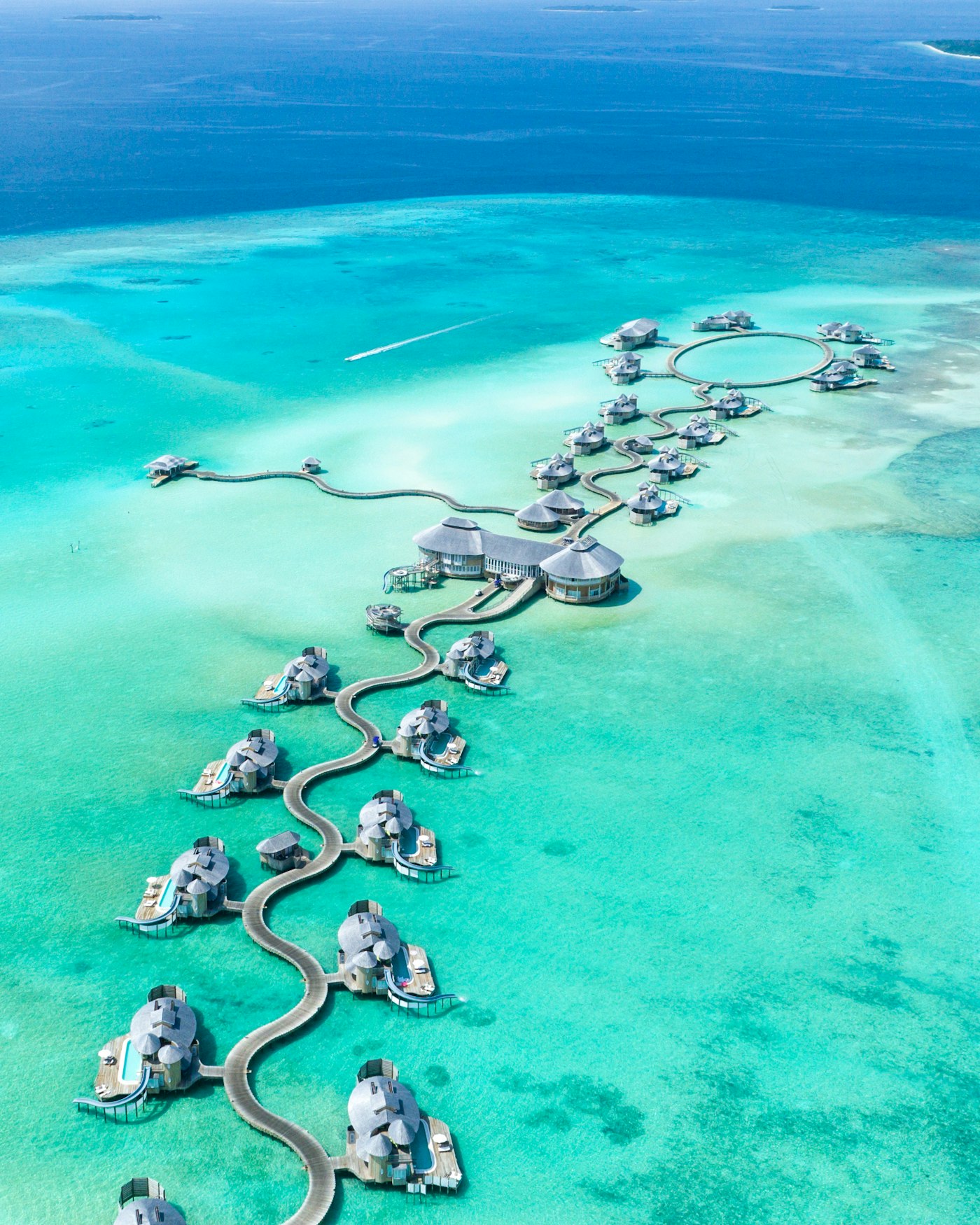
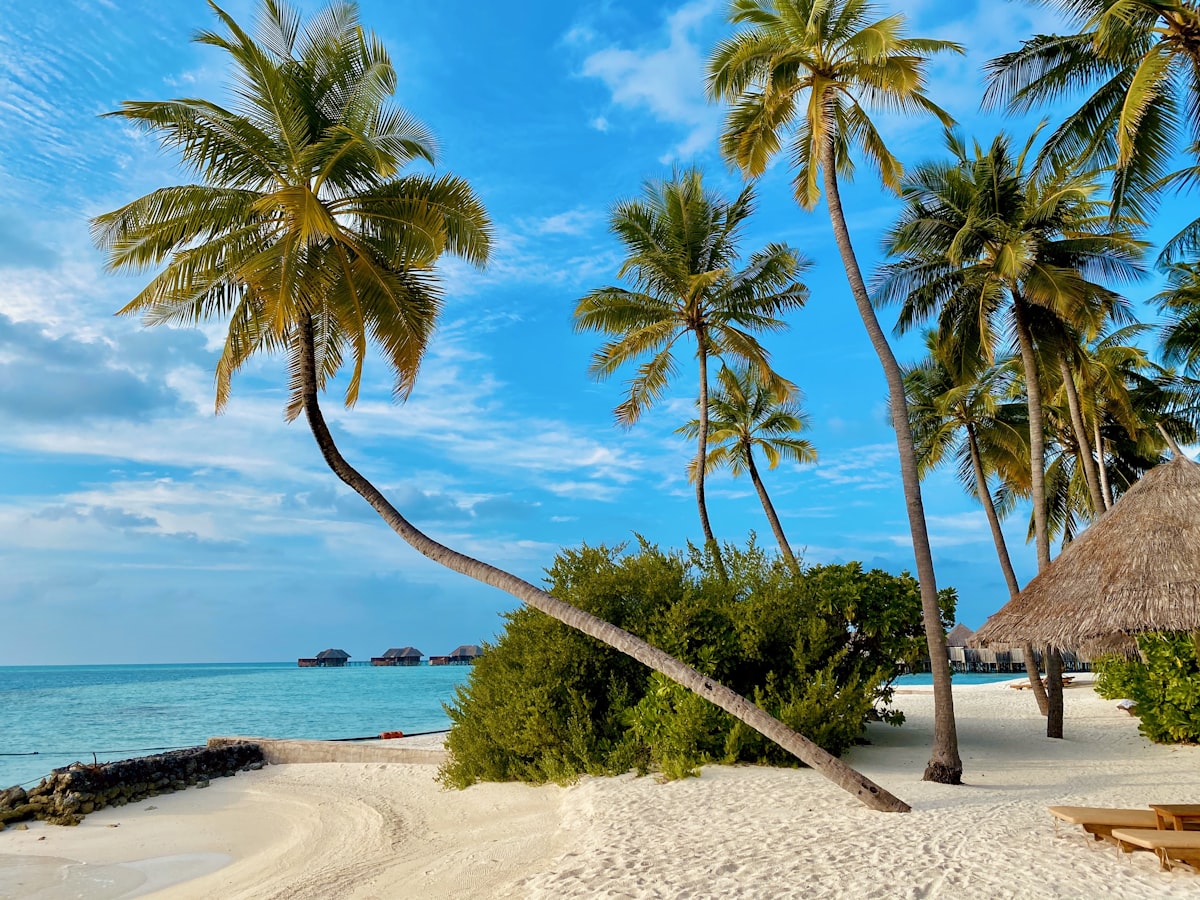
No destination in the world is easier to get wrong than the Maldives. From a distance every island looks identical — a ring of white sand, a lagoon the colour of glass, a line of villas marching over the water — and the photography is deliberately interchangeable. Yet the difference between the right island and the wrong one is the difference between the holiday of a lifetime and a very expensive week of quiet disappointment. This guide sets out how we actually match travellers to islands, in the plain terms the brochures avoid.
The organising fact of the Maldives is simple: one island, one resort. When you choose a property you are choosing everything — every restaurant you will eat in, every beach you will lie on, every face you will see for a week. There is no wandering into town, no trying the hotel next door. That concentration is precisely what makes the Maldives so restorative, and precisely why the choice deserves more care than any other hotel booking you will make.
Understanding the atolls
The Maldives comprises roughly 1,200 islands scattered across 26 atolls, of which around 170 host resorts. For practical purposes, the geography divides into three bands. The North and South Malé Atolls sit closest to the capital and its international airport, meaning speedboat transfers of 15 to 45 minutes — a genuine advantage after a long flight, and essential for travellers who dislike small aircraft. Many of the most storied names in Maldivian hospitality are here.
The Baa Atoll, a UNESCO Biosphere Reserve, is the choice for marine life: between May and November, Hanifaru Bay hosts one of the planet's great gatherings of manta rays and, on fortunate days, whale sharks. Resorts here trade proximity for spectacle, requiring a 30-minute seaplane hop. Further out, the deep southern atolls — Gaafu, Addu and their neighbours — offer the largest lagoons, the fewest neighbouring resorts, and an end-of-the-earth serenity that repeat visitors eventually graduate towards.
The villa hierarchy, decoded
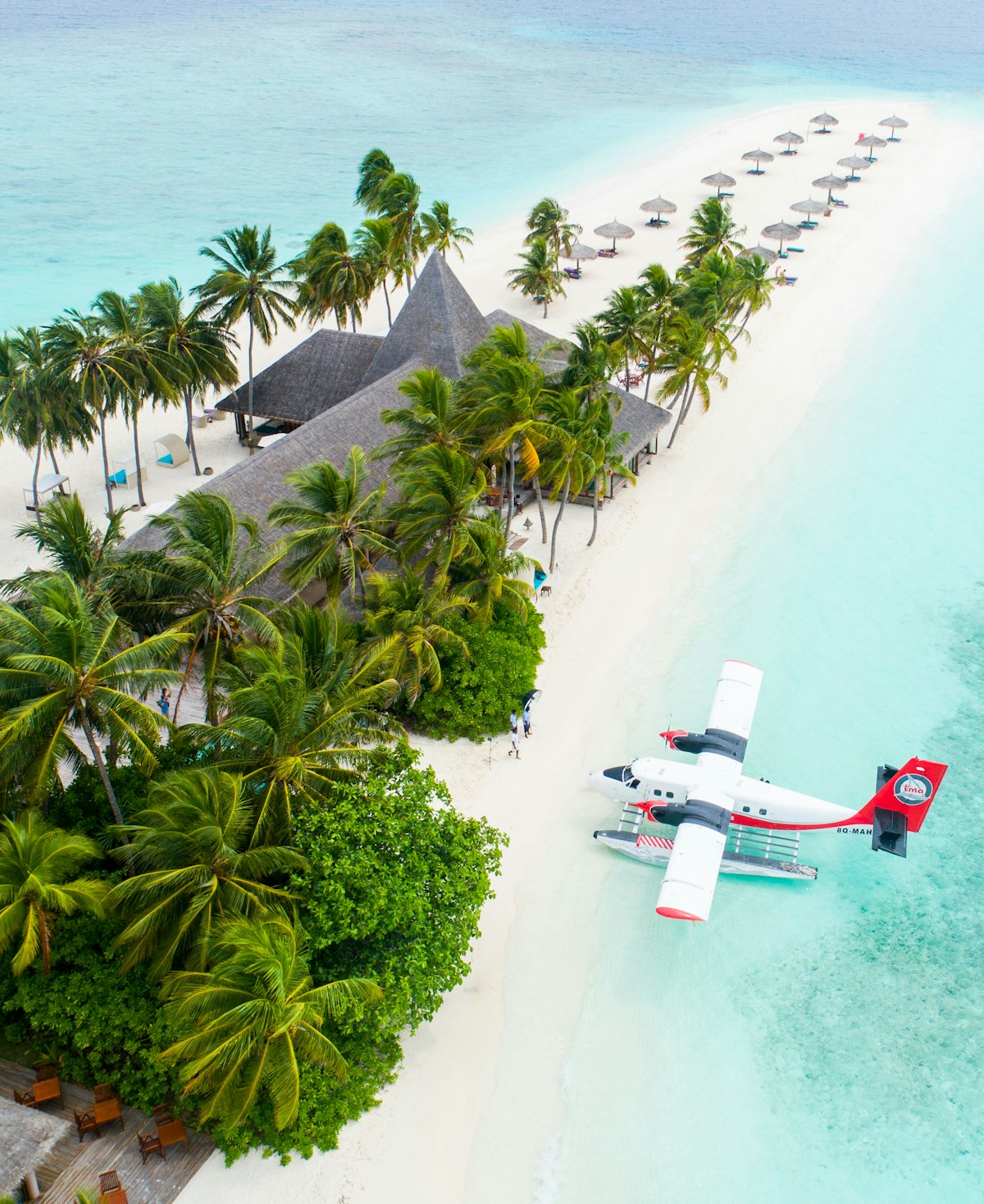
Maldivian resorts operate a villa taxonomy that rewards understanding. At the base sit beach villas — generally the largest for the money, opening directly onto sand, and the sensible choice for families with young children who will treat the ocean as a paddling pool rather than a view. Overwater villas are the icon: built on stilts above the lagoon, frequently with glass floor panels, steps into the sea, and outdoor bathrooms open to the sky. Within the overwater category, sunset-facing villas command a premium over sunrise-facing ones for an obvious reason, and villas at the far end of the jetty buy quiet at the cost of a longer walk to dinner.
Above these sit the residences — two to four-bedroom compounds with private pools, dedicated butlers, sometimes a private spa room or gym — which have quietly become the fastest-growing segment as multigenerational families and groups of friends adopt the Maldives. At the summit are the private islands within islands: standalone retreats occupying their own islet with dedicated staff and boats, where the resort is merely the supply line. If your priority is total seclusion, this tier exists specifically for you.
Seasons, and the honest truth about weather
The dry northeast monsoon runs from December to April: reliable sunshine, low humidity, mirror-calm lagoons, and the highest rates of the year — Christmas and New Year in the Maldives are among the most expensive hotel nights on earth, and they sell out first. The southwest monsoon, May to November, is routinely mischaracterised as a rainy season; in truth it brings passing showers between long bright spells, dramatically softer pricing, the best surf breaks, and the manta season in Baa Atoll. For divers, photographers and travellers who prize empty beaches over guaranteed blue sky, the so-called off-season is frequently the better purchase.
Our standing advice is straightforward: if the trip is a once-only celebration — a honeymoon, a landmark anniversary — pay for the dry season and remove weather from the risk register. If the Maldives is likely to become a habit, learn the shoulder months and let the arithmetic work in your favour.
Seaplanes, speedboats and the transfer question
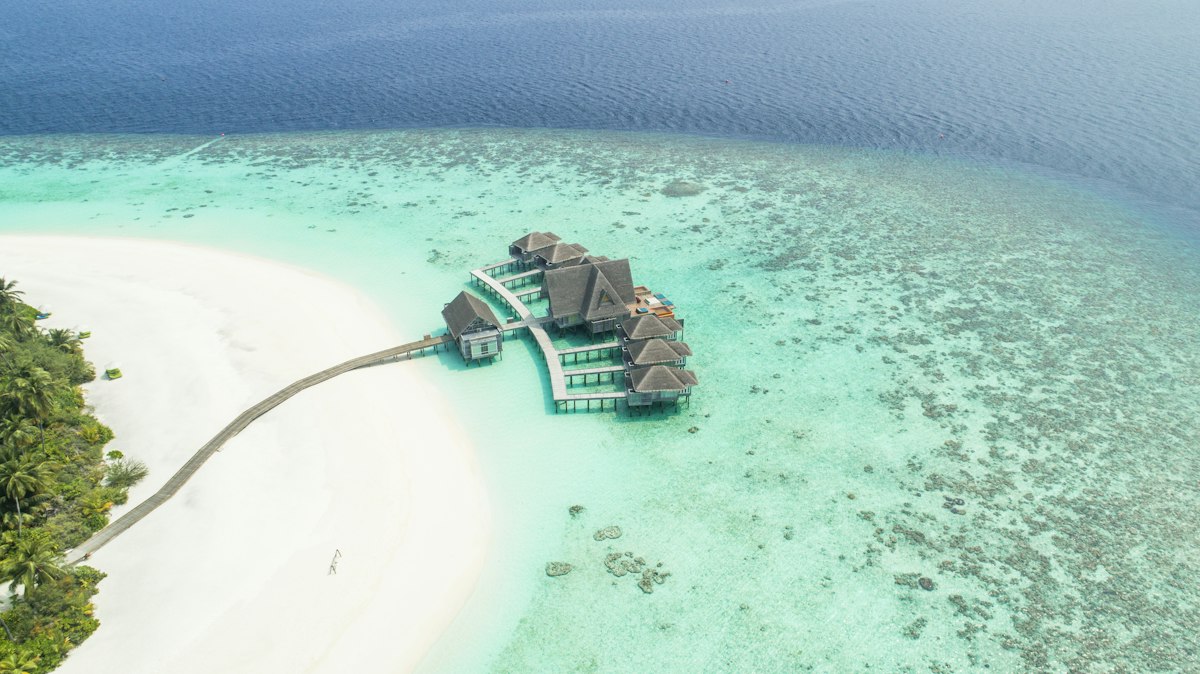
No element of a Maldives itinerary causes more avoidable friction than the transfer. Seaplanes operate only in daylight, which means an evening arrival into Malé can force an overnight at an airport hotel before you reach your island — a detail that surprises travellers every single week. Speedboat-served resorts near Malé eliminate this risk entirely; seaplane-served resorts repay the logistics with remoteness. A handful of far-southern properties are reached by domestic flight plus boat, adding romance and an hour or two in equal measure.
When we construct a Maldives itinerary, the international flight schedule and the transfer mode are designed together, not sequentially. Arriving on the right flight can mean stepping from aircraft to seaplane to villa deck within three hours; arriving on the wrong one can cost half a day of a five-night stay. This is exactly the category of detail a booking engine will never volunteer.
Meal plans: the decision that shapes the bill
Maldivian resorts sell food and drink on a spectrum from bed-and-breakfast through half board and full board to fully inclusive plans covering premium wines and excursions. Because every dinner will be eaten on the island, the meal plan is not an add-on — it is a structural decision. As a rule of thumb: couples who enjoy exploring speciality restaurants and choosing wine by the bottle often do better on half board with an à-la-carte budget; families and groups almost always benefit from comprehensive inclusive plans, which convert an unpredictable bill into a known cost before departure.
The calculation differs by resort, because the gap between plan price and menu prices differs by resort. We run this arithmetic for clients as standard, and the answer routinely changes which property represents the best value — a resort with a higher headline rate and a generous inclusive plan frequently undercuts a cheaper rival with expensive restaurants.

Honeymoons, families and the compatibility question
The Maldives serves two audiences magnificently and simultaneously — but rarely on the same island. Honeymoon-oriented resorts cultivate hush: adult-leaning restaurants, secluded villa wings, destination dining on sandbanks, spa programmes built around couples. Family-oriented islands invest instead in kids' clubs of genuine quality, shallow house reefs, connecting beach villas and teen programmes that keep adolescents willingly occupied. Neither is superior; the failure mode is booking across the divide. A couple celebrating their marriage next to an exuberant kids' pool, or a family shushed at every turn, is a mismatch no amount of luxury can repair.
The compatibility questions we ask are unglamorous and decisive: Who is travelling, and what does ten in the morning look like for each of them? What did you love and resent about your last beach holiday? Do you want the resort to entertain you or to leave you entirely alone? Fifteen minutes of honest answers eliminates ninety per cent of the market and leaves a shortlist of islands that genuinely fit.
What the rate card will not tell you
Beyond the villa and the meal plan, the elements that define a Maldivian stay are the ones no comparison site displays. The quality of the house reef — whether world-class snorkelling begins at your villa steps or requires a boat — varies enormously and matters daily. Service density, the ratio of staff to guests, separates the good islands from the great ones. The spa may be a facility or a philosophy. And the resort's approach to privacy — how villas are screened, how beaches are raked of footprints, how staff appear precisely when wanted and never otherwise — is the quality most cherished by the travellers who return year after year.
Booking strategy: timing, deposits and instalments
The best villas on the best islands for the peak weeks — festive season above all — are reserved eight to fourteen months in advance, frequently by returning guests before the general market sees availability. Waiting for a late deal in the Maldivian luxury segment is a strategy that occasionally saves money and reliably surrenders choice. Our approach inverts the risk: secure the precise villa you want early with a deposit, then settle the balance upfront or across structured instalments as the travel date approaches. The cost of certainty is a deposit; the cost of waiting is the villa you actually wanted.
Constructed as a single itinerary — business class flights timed to the seaplane schedule, transfers, villa, meal plan and any celebrations woven in — a Maldives journey booked through our Hotel Desk arrives as one confirmed plan under one point of responsibility, usually at a total below the price of assembling the pieces separately. That, in the end, is the argument for booking the Maldives the considered way: not merely a better price, but the near-certainty of the right island.
The new Maldives: what has changed for 2026
The Maldives a traveller encounters in 2026 is materially different from the one photographed a decade ago. The resort inventory has expanded and stratified: alongside the classic barefoot-luxury islands now stand design-led properties courting a younger clientele, wellness-first islands where the spa is the true centre of gravity, and a widening ultra-luxury tier competing on residences, private islets and staff ratios rather than villa counts. Connectivity has improved in step — more direct wide-body services into Malé from Europe and the Gulf, and a domestic network of flights and speedboats that has opened the far atolls to travellers unwilling to accept a full day in transit.
Two quieter shifts matter as much. Sustainability has moved from marketing language to engineering: the serious resorts now run coral propagation programmes with resident marine biologists, solar arrays that meaningfully offset generation, and desalination and bottling plants that have retired the imported water bottle. And the guest profile has broadened decisively — the Maldives is no longer a honeymoon monoculture but a destination of multigenerational villas, friends' reunions and solo wellness retreats. Both shifts reward travellers who choose islands on substance, because the gap between resorts that genuinely deliver and those that photograph well has never been wider.
A week on the water: what your days actually contain
The Maldivian day acquires a rhythm within about eighteen hours of arrival, and it is worth knowing in advance because it is the product you are truly buying. Mornings belong to the water: the house reef at first light, when turtles and eagle rays commute along the drop-off and the lagoon holds its glassiest hour; breakfast long and late; then the day's single organised ambition — a sandbank picnic, a dive on a channel where the current brings the big animals, a dolphin cruise at golden hour, a fishing trip done the Maldivian way at dusk. Afternoons are engineered for surrender: the spa over the water, the daybed, the book you finally finish.
The experiences worth pre-arranging are the ones with genuine capacity limits: the underwater restaurants (a handful of tables, booked out weeks ahead in season), destination dining on private sandbanks, the best dive sites at the right tide, and any celebration involving décor, musicians or a photographer. Everything else improves with spontaneity. A good villa host learns your rhythm by day two and begins proposing rather than waiting to be asked — one of the surest markers separating the great islands from the merely expensive ones.
Getting there in the right state: flights and routing
A Maldives holiday is won or lost partly in the air, because arrival state determines how much of the first day you actually receive. From the UK, the choice is between the direct services into Malé and the one-stop routings through the Gulf hubs, where a well-timed connection can mean a shower, a lounge dinner and an onward flight that lands in daylight for the seaplane window. Business class on this route is not vanity: an overnight flat bed southbound converts the arrival day from a write-off into a full day on the island — on a five-night stay, effectively a twenty per cent extension purchased with sleep.
Routing is also where the stopover strategy earns its place. Two or three nights in Dubai or Doha on the outbound leg — city energy, shopping, a desert evening — makes the Maldivian stillness that follows land even harder. Our flight desk builds these pairings routinely, with the seaplane schedule, not the airline's convenience, as the fixed point the whole itinerary is designed around.
Celebrations, proposals and the art of the occasion
No destination on earth stages a private occasion better, and none punishes poor planning of one more visibly. Proposals want a sandbank at sunset with a photographer briefed to be invisible; landmark birthdays want the wine cellar dinner or the chef's table built on the beach; anniversaries want the villa decorated during dinner so the return itself is the gift. All of this is eminently arrangeable — resorts maintain entire teams for it — but the difference between seamless and stilted is specification: the right evening (moonrise matters), the right tide (sandbanks are tidal creatures), dietary details confirmed, and the surprise logistics rehearsed with the villa host. We brief these occasions to the resort in writing before arrival, because romance improvises badly.
Common mistakes, and how the desk prevents them
After enough Maldives files, the failure patterns become predictable — and preventable. The evening arrival that strands a family in an airport hotel because no one checked the seaplane's daylight rule. The dream resort chosen from photographs that turns out to sit under the seaplane flight path, or beside a sandbank that vanishes at high tide. The half-board plan that meets à-la-carte prices and produces a final bill nobody enjoyed. The honeymoon booked, in perfect good faith, onto the island with the award-winning kids' club. The "great deal" villa that faces sunrise across the service jetty. None of these appears on a booking engine; every one of them is visible from a desk that knows the islands individually.
The correction is not complicated: current, island-level knowledge applied before money moves. It is the entire argument for booking this particular destination through people who sell it every week — and it costs nothing extra to apply.
The final word: certainty as the true luxury
Strip away the glass floors and the champagne sabres and the Maldivian proposition is ultimately about certainty: that the island fits, the villa faces the right way, the plan survives contact with the seaplane schedule, and the week delivers what its considerable price promised. Certainty is exactly what early, deposit-secured, professionally constructed booking buys — and why the travellers who know the Maldives best are invariably the ones with next year's dates already held. Whether this is your first island or your tenth, the method is the same: decide the priorities honestly, choose from a shortlist built on current knowledge, and let the instalments carry the balance while anticipation does its slow, pleasant work.
The planning checklist: your Maldives, step by step
Distilled to a working sequence, here is how a Maldives file moves from idea to confirmed itinerary at our desk. First, the dates and the reason. Honeymoon, anniversary, family escape or pure rest — the occasion sets the island category before any brochure opens. Second, the transfer tolerance. Speedboat resorts for evening arrivals and nervous flyers; seaplane atolls for remoteness worth the logistics. Third, the villa decision — beach for families and space, overwater for the icon, the split stay for travellers who refuse to choose. Fourth, the meal-plan arithmetic, run against your party's actual habits rather than the resort's assumptions. Fifth, flights constructed backwards from the seaplane window, in a cabin that lands you human. Sixth, the deposit — placed the moment the shortlist becomes a choice, with instalments scheduled to the departure date. Seventh, the occasion brief: every celebration, dietary need and surprise documented to the resort in writing before you fly.
- Twelve to eight months out: festive-season and Easter stays deposit-secured; villa category confirmed in writing.
- Six months out: flights ticketed; underwater restaurant and destination-dining tables requested.
- Three months out: instalments on schedule; spa programmes and excursions pre-booked for peak weeks.
- One month out: transfer confirmations re-verified against final flight times; celebration briefs re-confirmed with the resort's guest-experience team.
Followed in order, the sequence removes every failure mode this guide has described. It is not complicated; it is simply the discipline the destination's price deserves — and the reason our Maldives clients return with next year's dates rather than complaints. One island, one resort, one chance to choose well: choose with the desk that chooses weekly.
Frequently asked questions
Which is the best month to visit the Maldives?
How much should I budget for a luxury Maldives holiday?
Is the Maldives suitable for families, or only honeymooners?
Overwater villa or beach villa — which should I book?
Can I secure a Maldives booking with a deposit?
Ready to choose your island?
Tell the Hotel Desk your dates, party and priorities. We will shortlist three resorts that genuinely fit — each one securable on deposit while you decide.
Request Maldives Options